
Jebel Hafeet Drive: Al Ain’s Mountain Road, Viewpoints and Tips
The Jebel Hafeet drive climbs a smooth, wide mountain road from the outskirts of Al Ain to viewpoints and a car park near the top of the mountain, which rises well over a thousand metres above the surrounding plain. The road is roughly 12 kilometres of sweeping bends and is suitable for any car in good condition. Most people go in the late afternoon for sunset over Al Ain and the desert, then stop at the Green Mubazzarah park and hot springs at the base.
In this guide
About Jebel Hafeet
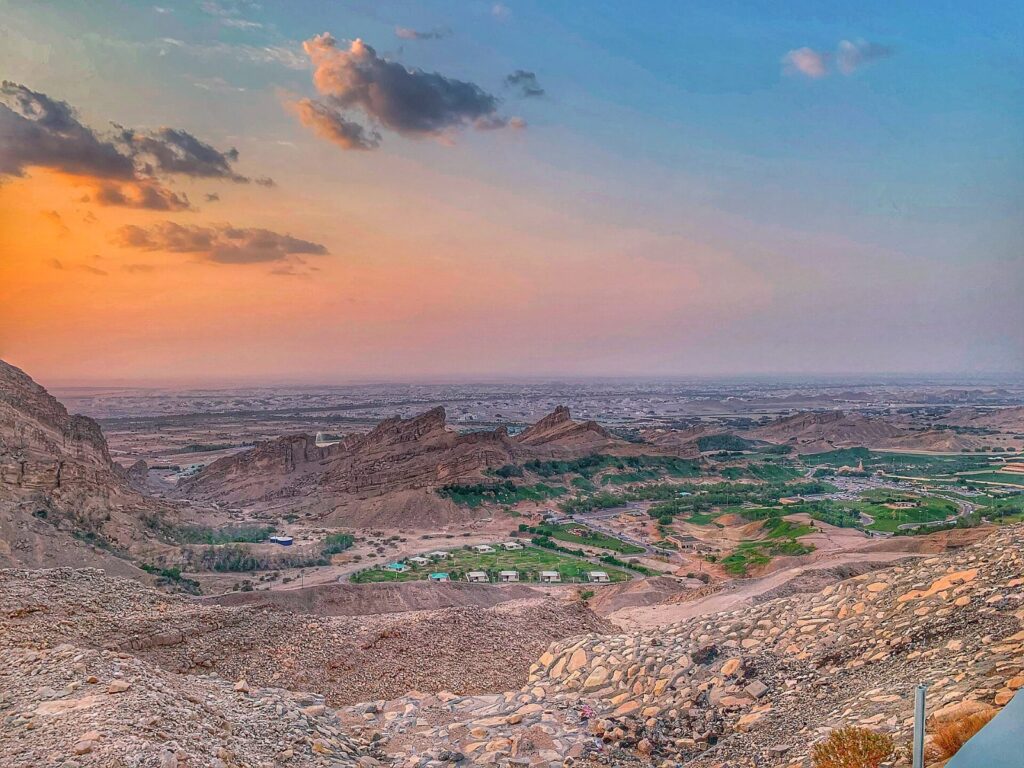
Jebel Hafeet is a limestone mountain that stands alone on the edge of Al Ain, straddling the border between the UAE and Oman. It is the most prominent landmark around the city, visible for miles across the flat desert. The mountain’s slopes have revealed ancient tombs, and the area around Jebel Hafeet forms part of the Cultural Sites of Al Ain, listed by UNESCO as a World Heritage Site.
The road to the top is often described as one of the great driving roads of the region. It is wide, well lit for much of its length and well surfaced, with lay-bys and viewpoints along the way.
Getting there
Al Ain is reached easily from both Abu Dhabi and Dubai via major highways.
| Starting point | Approximate time to the base of Jebel Hafeet | Notes |
|---|---|---|
| Al Ain city centre | 20 to 30 minutes | Simple drive south of the city |
| Dubai | About 1.5 to 2 hours | Via the Dubai–Al Ain Road |
| Abu Dhabi | About 1.5 to 2 hours | Via the Abu Dhabi–Al Ain Road |
Times vary with traffic and your starting point. Use our road trip fuel and time planner to plan the trip and fuel stops.
The drive itself
From the base near Green Mubazzarah, the road winds steadily upwards. There are around sixty bends, many of them long, open curves rather than tight hairpins. Lanes are generous, and there is usually space at viewpoints to pull off safely.
Driving the road safely
- Keep to the posted speed limits; cameras are used
- Use a lower gear on the way down to avoid overheating the brakes
- Stay in lane through bends, as cyclists and buses use the road too
- Park only in lay-bys and official car parks
- Watch for cyclists and runners, especially early morning and evening
The descent needs more care than the climb. Engine braking keeps the brakes cool and the car steady.
At the top
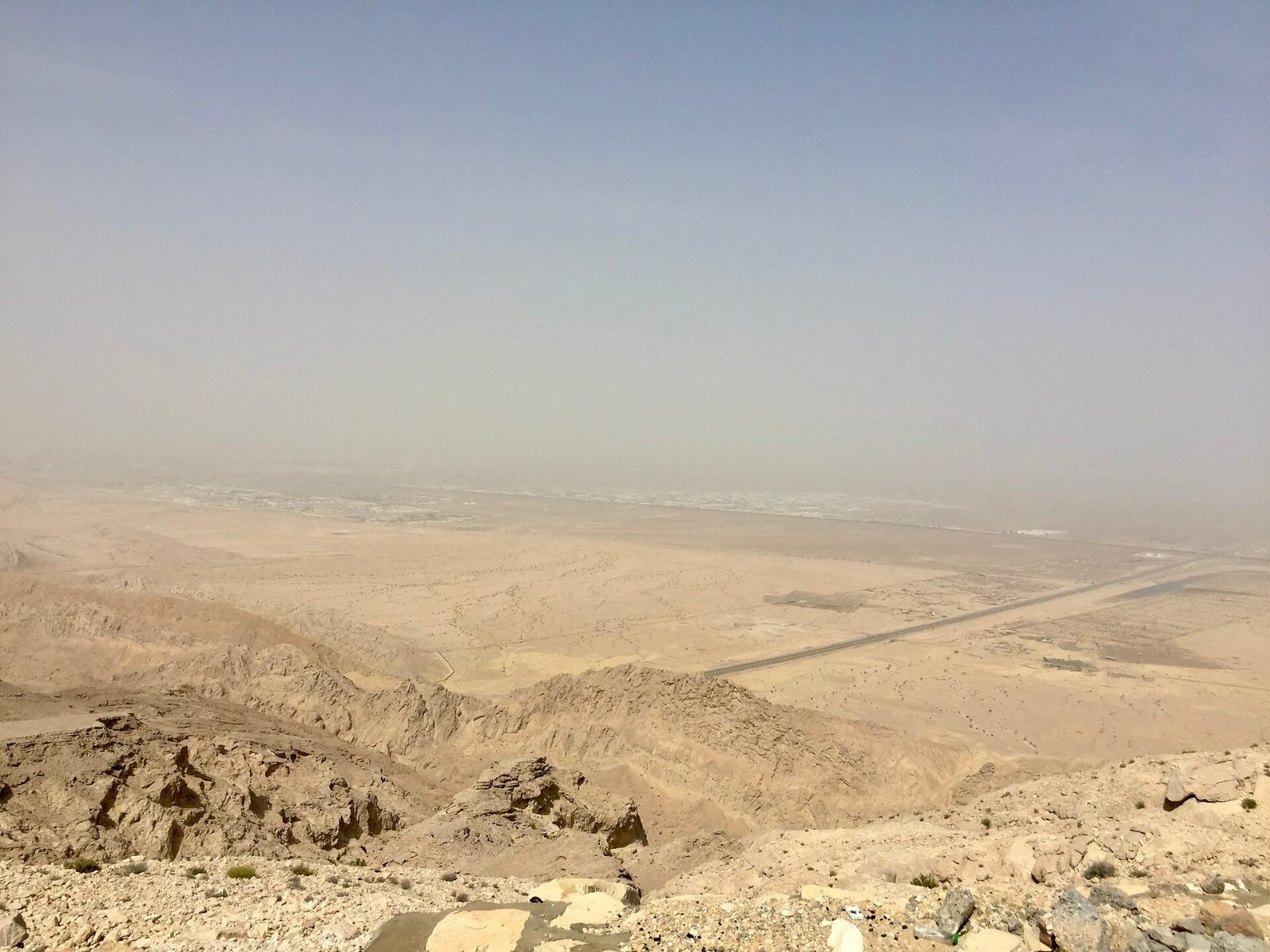
Near the summit, there is a car park and viewing area with sweeping views over Al Ain, the surrounding desert and the Hajar range in Oman. Small cafés and a hotel near the upper road offer refreshments. Sunset is the busiest time, so arrive early on weekends to find parking.
Arrive half an hour before sunset, watch the city lights come on, then take the descent slowly in the cooler evening air.
Green Mubazzarah and the hot springs
At the foot of the mountain, Green Mubazzarah is a large park with lawns, picnic areas and natural hot springs, with pools fed by warm mineral water. It is popular with families, especially on cooler evenings. There is also accommodation nearby for those who want to stay overnight.
Combining the drive with Al Ain
Al Ain is a green, relaxed city with plenty to see, which makes Jebel Hafeet a good end to a day of sightseeing.
Al Ain Oasis
A large palm oasis with shaded walking paths and traditional falaj irrigation channels, still in use. It is one of the most peaceful places to walk in the UAE in the cooler months.
Al Jahili Fort
A historic fort with an exhibition, close to the city centre.
Al Ain Zoo
One of the region’s best-known zoos, with a safari area and conservation programmes.
Camel market
A traditional livestock market that gives a glimpse of local trade and culture. Visit respectfully and be cautious about agreeing to paid photos or tours offered on the spot.
Photography on the mountain
The viewpoints on Jebel Hafeet face different directions, so it pays to stop at more than one. In the late afternoon, the lower lay-bys catch warm light on the road’s curves, which makes for the classic shot of the road snaking up the mountain. Near the top, the view over Al Ain works best just after sunset, when the sky still has colour and the city lights begin to show. A small tripod or a phone’s night mode helps in the blue hour.
Stay well back from barriers and edges, keep children close and never stand in the road for a photo. Drivers coming round a bend will not expect someone in the lane.
When to go
The cooler season, roughly October to April, is the best time. Summer is very hot in Al Ain, but the mountain top can be a few degrees cooler and sunsets are still spectacular. In summer, go late in the day and carry water.
Heat and breakdowns
On hot days, keep an eye on your car’s temperature gauge during the climb, and use moderate air conditioning. If the car overheats, pull into a lay-by and let it cool before continuing.
Cycling Jebel Hafeet
The mountain is a favourite with road cyclists and has featured as a summit finish in a professional race. If you drive at weekends or early mornings, expect groups of riders. Overtake patiently with plenty of space.
Rental cars
Jebel Hafeet is a paved public road, so ordinary rental agreements normally allow the drive. Check that the car is in good condition before you leave, especially the brakes and tyres. Our rent a car Al Ain guide covers renting locally.
Frequently asked questions
Is the Jebel Hafeet road dangerous?
It is a well-engineered, wide road. With sensible speeds and engine braking on the descent, it is a comfortable drive.
How long does it take to drive up Jebel Hafeet?
Usually around 15 to 25 minutes from the base, depending on traffic and stops.
Can I visit Jebel Hafeet at night?
Yes. The road is lit along much of its length, and the city lights are a highlight after sunset.
Is there a fee to drive up Jebel Hafeet?
The road is a public road. Some facilities at the top or nearby may charge for entry or services.
Sources: Visit Abu Dhabi, UNESCO World Heritage Centre, Department of Culture and Tourism Abu Dhabi
Cover photo: Ahmedhassanyassin, CC BY-SA 4.0. Last reviewed: 2026-11-25.
