
Abra Rides on Dubai Creek: Routes, Stations and How to Ride
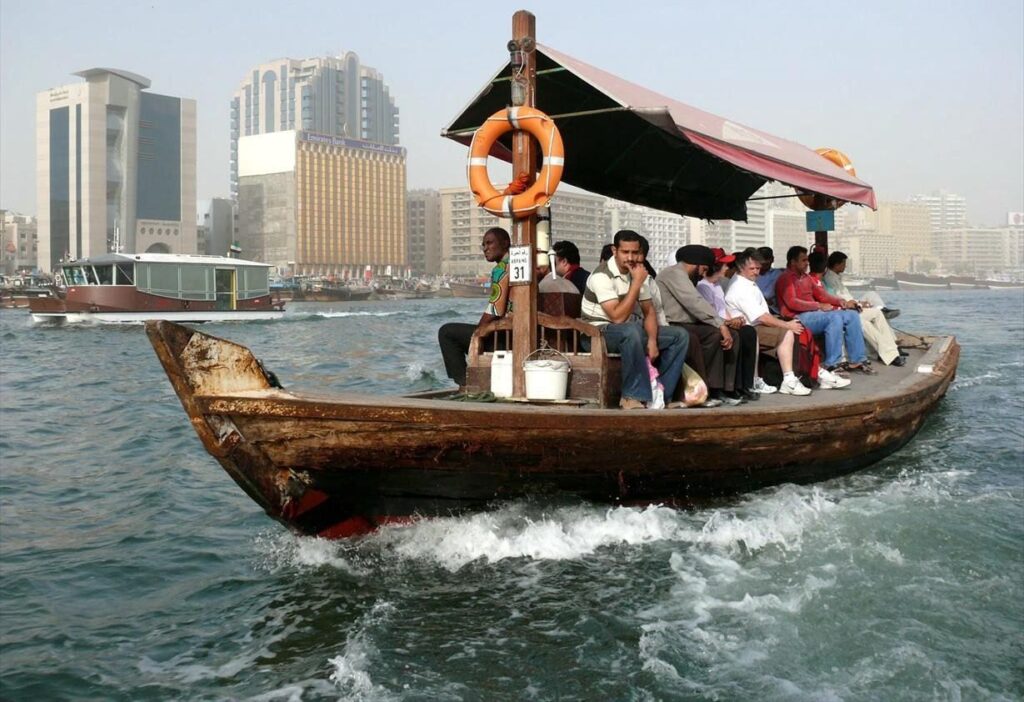
An abra is a traditional wooden water taxi that carries passengers across Dubai Creek between Bur Dubai and Deira. The crossing takes only a few minutes, costs very little and is one of the most atmospheric ways to experience old Dubai. Boats leave from stations near the souqs on both banks as soon as they fill up, and you can also hire an abra privately for a longer cruise along the Creek.
In this guide
What an abra is
Abras have carried people across the Creek for generations, long before bridges and tunnels linked the two banks. Today’s boats are still built in a traditional style, with a wooden hull, a central bench where passengers sit back to back and a canopy for shade. They are operated under the RTA’s marine transport network, with licensed operators and regulated stations.
For visitors, the abra is less about getting from A to B and more about the experience: the smell of the water, the view of dhows unloading cargo, the skyline across the Creek and the bustle of the souqs on either side.
The main abra routes
| Route | Connects | Nearby sights |
|---|---|---|
| Bur Dubai to Deira Old Souq | Bur Dubai side near the Textile Souq to Deira near the Spice Souq | Al Fahidi, Dubai Museum area, Spice and Gold Souqs |
| Dubai Old Souq to Al Sabkha | Bur Dubai old souq area to Deira, Al Sabkha | Old souqs, traditional trading streets |
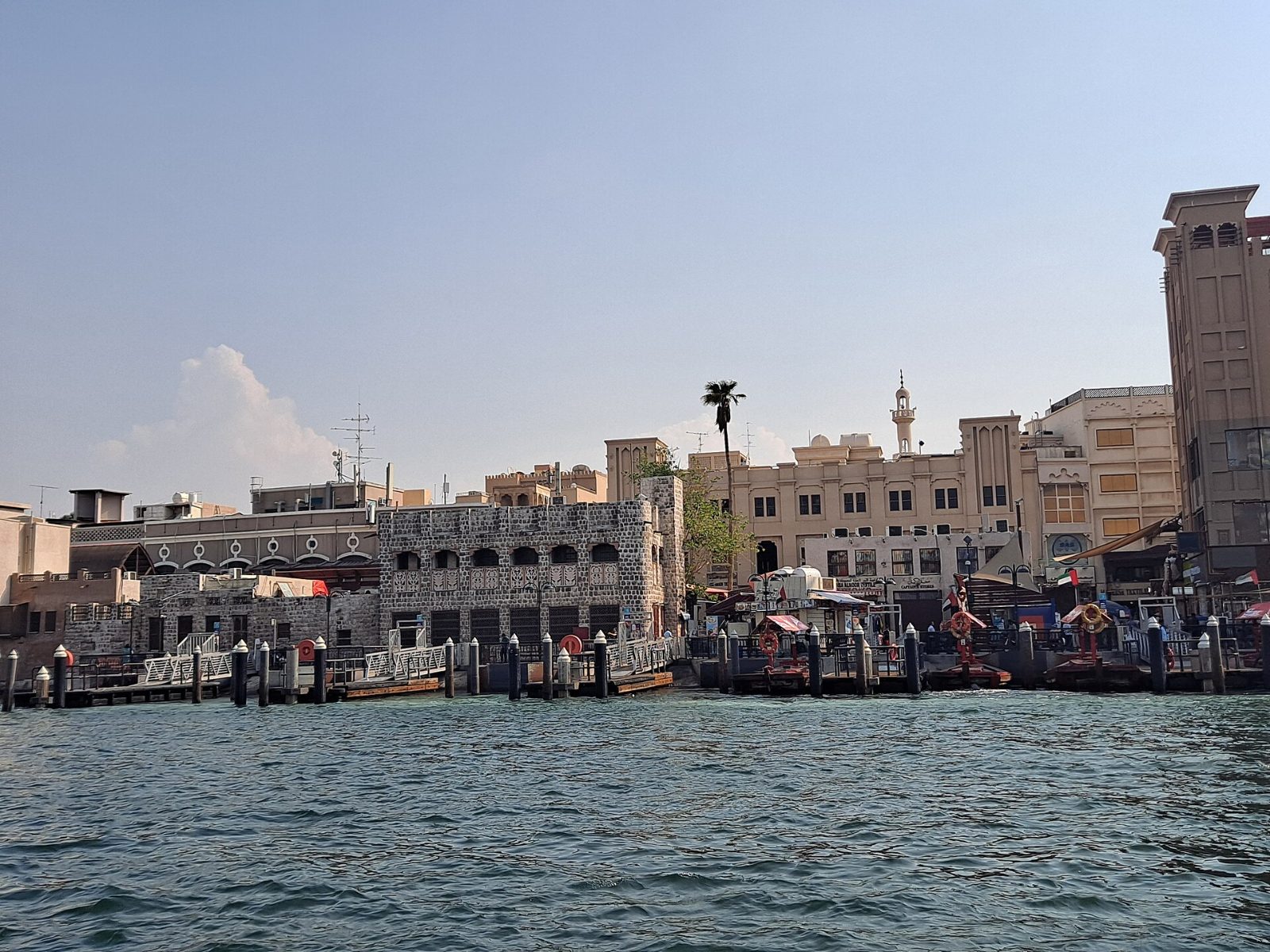
Station names and routes are occasionally updated by the RTA, so look for signs on the waterfront or check the RTA website. On both banks, stations are clearly marked and close to the old souqs.
How to ride
- Find a station on the waterfront on either bank. Look for the RTA signage and the queue of passengers.
- Pay the fare. It is a small amount; payment methods have been changing as the RTA modernises marine transport, so carry a little cash and check whether Nol is accepted.
- Step on carefully. The boat moves with the water; watch your footing and take the boatman’s hand if offered.
- Sit on the central bench. Boats leave when full, which is usually quick.
- Enjoy the crossing. It takes just a few minutes.
- Step off at the other bank and head into the souqs.
Cash and small notes
Keep small change handy for abras and souq purchases. Not every stall accepts cards, and change for large notes can be slow.
Combining an abra ride with old Dubai
A classic half-day walk links the two banks:
- Start at Al Fahidi Historical Neighbourhood on the Bur Dubai side, with its wind towers, narrow lanes, galleries and cafés.
- Walk through the Textile Souq towards the Bur Dubai waterfront.
- Take an abra across to Deira.
- Explore the Spice Souq, then walk to the Gold Souq.
- Return by abra, then walk along the waterfront to Al Seef, a redeveloped heritage-style district with restaurants and shops.
Cross the Creek in the late afternoon. The light turns golden, the heat eases, and the souqs come to life.
Private abra hire
Instead of the quick crossing, you can hire an abra privately for a longer ride along the Creek, typically by the hour. It is a relaxed way to see the waterfront, dhow wharves and Creek-side districts. Agree the duration and price clearly at the station before setting off, and use official stations rather than unofficial offers.
Other boats on the Creek and beyond
The RTA runs several types of marine transport:
- Abras: the traditional crossings described here
- Water bus: air-conditioned boats on set routes in some areas
- Dubai Ferry: larger boats linking areas such as Al Ghubaiba, Dubai Marina and others, good for scenic trips
- Water taxi: private hire boats bookable for specific journeys
For general public transport, see our Dubai Metro guide and Nol card guide.
Getting to the abra stations
On the Bur Dubai side, the Al Ghubaiba metro station on the Green Line is within walking distance of the waterfront. On the Deira side, Al Ras station on the Green Line is close to the Spice Souq and abra stations. Taxis can drop you near the souqs, though streets are narrow and busy.
Safety on the water
Abras are open boats with low sides. Keep children seated and close, hold onto bags and phones, and do not lean over the edge for photos. Follow the boatman’s instructions.
A little history of the Creek
Dubai Creek is the reason the city exists where it does. The natural inlet gave early settlers a sheltered harbour for fishing, pearling and trade, and the communities of Bur Dubai and Deira grew up facing each other across the water. For much of the twentieth century, the only practical way to get from one side to the other was by boat, which is how the abra became part of daily life.
Trade still shapes the waterfront today. Wooden dhows tie up along the Deira wharves, loading everything from electronics to household goods for ports across the Gulf, Iran, East Africa and the Indian subcontinent. Watching the cargo being stacked by hand on the quayside is one of the most interesting free sights in Dubai, and the abra crossing gives you a close view from the water.
Best time to go
The cooler months from October to April are ideal for walking in old Dubai. In summer, go early in the morning or after sunset, carry water and take breaks in air-conditioned cafés. Friday midday prayers can affect opening hours in the souqs.
Frequently asked questions
How long does an abra crossing take?
Just a few minutes from bank to bank.
Do abras run at night?
Abras operate from early morning until late evening. Check the RTA website for current hours.
Can I take a pushchair on an abra?
Small, folded pushchairs are usually manageable, but boarding involves a step down into the boat. A baby carrier is easier.
Is the abra suitable for people with limited mobility?
Boarding requires stepping down into a moving boat, which can be difficult. The larger RTA ferries and water buses are easier to board.
Sources: RTA Dubai, Visit Dubai
Cover photo: Imre Solt, CC BY-SA 3.0. Last reviewed: 2026-11-25.
